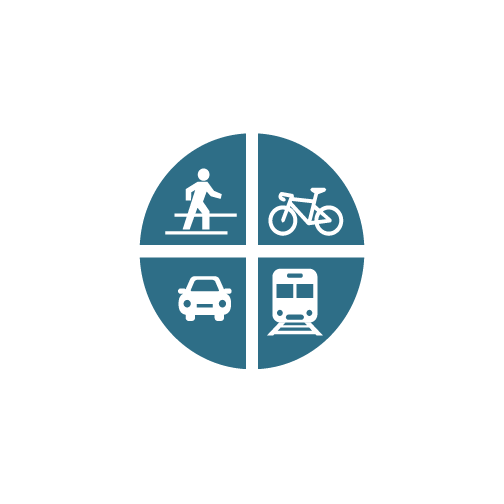
Developing multimodal mobility hubs co-locates multiple non-Single Occupancy Vehicle transportation options to facilitate seamless travel transitions which makes using transit and other non-single occupancy vehicle modes of transportation more convenient.
Implementation Details
Prioritize installation of mobility hubs at Rail and Ferry Stations identified in the Marin County Mobility Hub Plan, high ridership Marin Transit bus stops, and in identified Countywide Transportation Plan Activity Hubs.
Incorporate considerations for mobility hubs into future multimodal corridor planning efforts.
Coordinate with local jurisdictions to adopt Marin County Mobility Hub Plan to identify priority locations and align capital planning.
Seek funding to advance mobility hub concepts to implantation.
Mitigation Potential
Mobility hubs can increase accessibility to transit, walking, biking, ridesharing, bike sharing, and carpooling. When coordinated, mobility hubs can offer a convenient mobility alternative to private vehicles, reducing VMT.
Mobility hubs promote transportation equity by integrating multiple travel options in one accessible location. Locating hubs in underserved areas can improve mobility for residents without personal vehicles. Ensuring that hubs are designed for universal access, including safe crossings, shade, real-time info, and multilingual signage, helps reduce barriers for low-income and disabled riders.
Funding Sources
Would require initial funding to construct, plus continued funding for maintenance and operations. Active transportation and transit grants and other one-time sources are available (though competitive). Such funding sources include regional, state and federal funding opportunities.
Implemented in Marin County
Current TDM Implementation
TAM has developed a Mobility Hub Plan to assess the opportunities for Mobility Hub Plans at nine transit stations in the county, including SMART stations in Novato, San Rafael, and Larkspur, and ferry terminals in Larkspur, Tiburon, and Sausalito. These locations already exhibit certain facets of mobility hubs, combining multiple transit modes, bike share services, and adjacent mixed-use development.
TDM Benefit Locations
This TDM Measure should be considered for major transit centers undergoing improvements or development, like the new San Rafael Transit Center, and communities that have been historically underserved by transit. CIPs should be updated to reflect first/last mile connections and opportunities to create mobility hubs at non transit activity hubs including health care and commercial districts.